Are you looking where you're going...
...or just going where you're looking?
It's an important distinction. Anyone who's ridden a bike knows this. You find yourself heading for the kerb; your eyes fix on it, and the bike just keeps going there.
It's just as true in business. You've got your eyes on a destination, but sometimes it's not the right one. It can be the direction of your marketing, but equally it can be the business itself. I'm not here to tell you everything you're doing is wrong, but my track record shows some examples of angles I've spotted through seeing the swamp without having to fight the alligators.
Playing their cards right
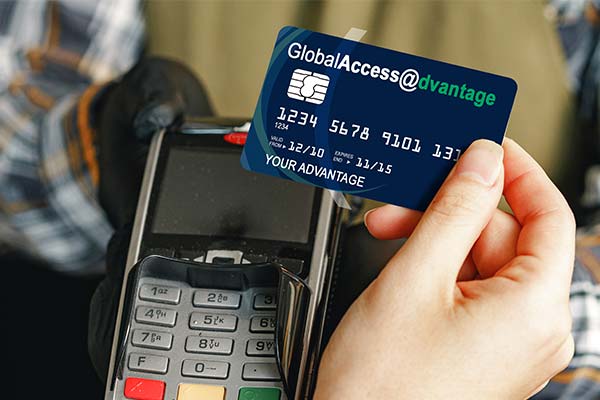
I was asked by HSBC Merchant Services to help make their GlobalAccess card more competitive. They identified Barclaycard as their principal rival and instructed me to examine their offering so that it could be emulated. I've come across this several times, and it's pretty much always a mistake. Copying a competitor means you'll never catch up. Instead I suggested we focus on the merchant journey. Payment companies at the time expected their customers to fit in with the card acquirer's systems. As Merchant Services' systems were still in development, we had a chance to turn this around.
I worked closely with the development team, talking to the merchants themselves and learning about their pain points. Instead of aping the basic payment facilitation portals of the competition, we built a powerful tool that actively helped merchants run their businesses. Having gone through this process before with Thorn EMI and others, I was less surprised than my client by how little impact the required changes had on the IT project. Simply looking at the project from the customers' point of view drastically improved the merchant proposition without any major changes to internal processes.
Armed with a unique, customer-oriented proposition, I wrote nearly 30,000 words of copy for the new website, sales documents and presentation packs. Fees and transaction rates, previously a major challenge, were outweighed by easier operations and powerful business tools.
Two years later, Global Payments had become a major operator in its own right. They bought out HSBC to become a globally significant payment business.
What are your customers buying?
Companies evolve, frequently developing a capability that sets them apart from their competition. But surprisingly few alter their proposition. They continue to sell themselves to the same people, using broadly the same approach. Their unique unique proposition is often lost among the "oh, and we do this" add-ons.
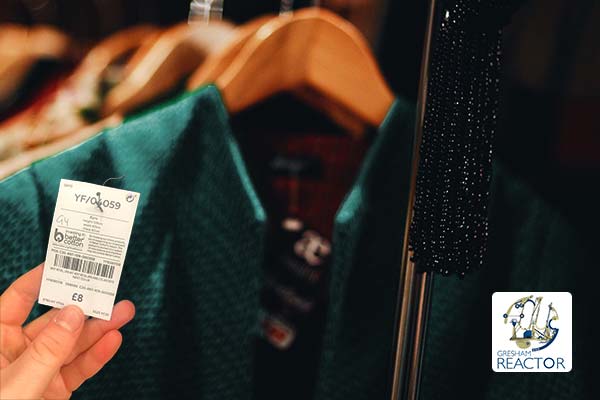
This was true of Gresham, a remarkable company with whom I worked for several years. They printed barcode tickets for the retail fashion industry, and they were seriously good at it. They were a relatively UK small business of a 100 or so employees, but they competed strongly against two global giants. Their design work was excellent and they were innovative, but almost every conversation came down to cost per thousand. They lacked the economies of scale of their competitors and so were always challenged on profitability. When they won, it was usually because the customer was willing to pay a higher price. Why they'd do this was patently obvious when viewed by this relatively uninformed outsider.
Their customers weren't buying the tickets; they were buying the unique supply chain management that my client facilitated. They cut costs, reduced administration and hugely reduced the volume of fake branded products entering the marketplace. Who printed the tickets, and for what price, became irrelevant.
The strategic response wasn't just to improve the marketing: it was to shift focus to become a supply chain enabler. In less than six months, it pivoted from a ticket printer to a systems provider, no longer competing on manufacturing price and instead earning high management fees for tickets printed by their erstwhile competitors.
Within a year, the business was acquired, to great shareholder advantage (employees were shareholders), by one of those global giants.
There's no competition
I've always maintained that good marketing needs a great customer. They're a rare species, but Lister Trade Frames was one. For strategies to work, the client needs to trust your ideas, and that takes bravery. Listers were a replacement window manufacturer facing an industry recession. Instead of retreating to lick their wounds, they attacked harder.
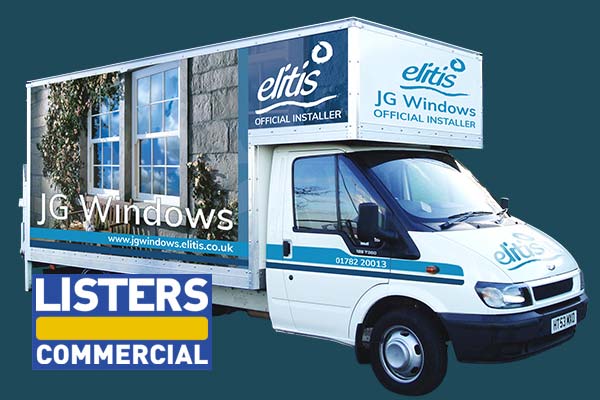
Most manufacturers in the industry operate their own sales and installation team, placing them in competition with their trade customers. Listers had never done this, so our first move was to add "There's no competition" as a strapline in all trade advertising. Then we set to work to support the installers and help them survive the depressed marketplace. We created the Elitis brand, pitching it as a premium product (which it was). We vetted the best installers and conferred Official Installer ststus for them. We liveried their vehicles and provided them with personalised websites. We co-funded local publicity. We flooded the marketplace with the Elitis brand. At no point was Listers mentioned.
Customer enquiries were collected and passed direct to the appropriate installer. Recognising that these small companies aren't always efficient in following up, we monitored responses, prompting for action and helpnig with quote creation and scheduling.
Every Elitis product carried an identifying tag. Customers received a welcome pack, which included a link to enter their tags to the installer's site to activate a ten-year, manufacturer-backed warranty.
As competitors struggled or even folded, Listers grew consistently, and the installer network grew from local companies to become nationwide. We had plenty of bright ideas, but this brilliant client had the guts to run with them.

Who's your customer?
Targetting isn't just a case of identifying your marketplace. I've worked with B2B clients who had as few as a dozen companies for whom they had a viable proposition - and yet they spent fortunes on social media, advertising and a raft of other mass-marketing vehicles. Okay, I've heard the excuse of "we're building profile", and there's some validity in doing so, but wouldn't you rather have revenue?. B2C marketing is more challenging, but it's still possible to pick your targets.
Sometimes it's even worth designing your position to filter out the prospects you don't want. A big part of your strategy should be in seeking out the smartest way of beginning the right conversation. I've got an idea or two there that have worked for other clients - and saved them an awful lot of money. Remember that revolting image on my home page? I can help you devise strategies to kiss a lot fewer toads.

...so it's not just marketing
Marketing stragey isn't just how you publicise your company. It is your company. Your image, products, your propositions and your visibility need to fit around each other like a Bach violin duet. Be ready to evolve any of them, and be brave enough to look at the very basis of your direction. Understand what your customers are actually buying. I can pretty much guarantee it isn't your price advantage1. Understand that customers rarely buy what they need; they buy what they want. I go into more detail about this here. You may have what they need; it's my job to show them what they want.
Fundamental business change is daunting, but if it's needed, you need to reconise the fact early and make the change at your own pace. Kodak invented the digital camera and it sold massively, but their investment in film production held them back from evolution, and their value fell from $31 billion in 1997 to bankruptcy in 2012.
1: If it is your price advantage, then it's even more urgent that you look for reinforcements; you're more vulnerable than you think.
